Tuesday, May 16, 2023

A Decade of John Games! Part 1: 2013-2017

I released Quarantine on May 16th, 2013. That means I've been making and releasing games as an adult for 10 years! I’ve been making little games and prototypes much longer of course, but I've lost all my Game Maker or RPGMaker 2003 work from elementary and middle school. So this still feels like a pretty big milestone for me!

I want to do a rundown of each year, what games I made, and some thoughts on what each game means to me. This post covers 2013-2017 — I'll do 2018-2022 sometime soon. This is going to be an extremely self-indulgent post. I'm mostly writing this because I think it'll be fun to refer back to ten or twenty years from now, and see how 2023 John felt about his work. I hope you enjoy the commentary nonetheless!

2013

I remember having an “enough is enough” moment this year. I’d been playing freeware games for ages, and I wanted to be a creator myself, to make and share games with my friends. I’d been part of the SMPS forum for 2 or 3 years at that point, and it was the most stable and supportive web community I’d ever been a part of. I knew I could share creative work there and folks would play it and be nice. And yet every single project I'd started for ages seemed to fizzle out before it even got off the ground.

"Enough is enough" turned into “let’s just make something really small”. I tried to make a simple score attack game where you shoot down waves of enemies attacking a castle wall. I used RPGMaker 2003 assets in Game Maker. I got frustrated quickly — I couldn’t make it feel quite right. 

I forget the exact impetus for this, but I started Quarantine right after dropping the score attack game. I think I came up with the Lost Woods puzzle that starts the game first. Then I thought of the Ikaruga polarity platforms and quickly implemented them. I spent about a week making the basic game and most of the levels. I got stumped trying to make a climax, though.

I waited a week, then got back to it. I came up with the static for the last level after trying a few more ambitious things and getting frustrated. I added the same static and NIN music sample to the title screen, and very suddenly I had a finished cool thing. I shared it online in a hurry, feeling immensely pleased with myself.

My SMPS buds played it and were naturally sweet and supportive. A couple weeks later I started seeing it mentioned on other sites. One forum post listing new freeware game recommendations put Quarantine right next to thecatamites’s Lake of Roaches; I felt extremely starstruck seeing my work listed next to catamites'.

What really blew my mind was seeing Quarantine featured on the front page of IndieGames.com, a website I’d been frequenting for years. I was very excited — I remember literally running out of my house and dashing around the driveway hooting and hollering. It was a level of immediate recognition I wasn’t expecting, and it knocked me on my ass in a great way. It seems insane in retrospect. I was 19 and had maybe fifty Twitter followers at the time, and I have no idea how my first little game wound up getting that kind of reach.

I started Fugitive shortly after that, still high on all the recognition Quarantine had gotten. I scoped way bigger for Fugitive, which easily could’ve bitten me in the ass. I wanted to make my “reverse metroidvania”, a game where you start off strong and then lose abilities as the game progresses. It was an idea I’d chewed on for years. (It’s an idea a lot of devs chew on for years.)

Mercifully, I decided to make it a linear Mega Man-y platformer instead of an actual metroidvania. I used lightly edited ripped art for the player character and most of the tiles, and Newgrounds Audio Portal music for the soundtrack. After thinking up the basic shape of the story (including the final encounter with the “fugitive”), I was able to get a first level up and running pretty quick.

Fugitive took about five months to make. It’s a full-length retro style platformer with multiple levels and bosses. You can beat it in 15-20 minutes if you know what you’re doing — it’s one of the biggest games I’ve ever made. The final boss is still the most elaborate action setpiece I’ve designed. Even with all the aesthetic shortcuts I took, there’s no way to make that much bespoke hand-designed platformer level and have it not be a lot of work.

Fugitive rules! I still like it a lot. A lot of other people liked it! It got featured once again on IndieGames.com (thanks Paul Hack!), plus several other sites like the late great FreeIndieGam.es. It’s by far my most viral success in ten years of game dev. It's a little demoralizing for your second game to be your most successful when you’ve put out like two dozen. But I’ve come up with other metrics of success since then, and I can’t resent Fugitive for being the breakout game when it’s as good as it is. 

I put out Into the Vortex a month after Fugitive. I started making it for Ludum Dare (the theme was “You Only Get One”), but went over time and spent a week working on it. It’s a short one-boss shmup inspired by the GameBoy game SolarStriker. It’s a little euroshmup-y playing it these days — when I realized it was very hard to dodge all the attacks, I gave the player a 25 hit health bar. That’s a lot for a three minute game. I wouldn’t do that these days; I’d rather make the action gentler but give you fewer hits. I can dodge almost all the patterns consistently, so I generally don’t think it’s bullshit. And I love the mood it’s got going on. (I’d go on to reuse that smoke texture in several more games.)

I’d built up a pretty consistent style across Quarantine, Fugitive, and Into the Vortex. All three games relied on wordless storytelling, they're mostly grey-scale, they’re all pretty hard, and they tend towards uneasy ambiguous conclusions. These games neatly represent “John that really loved Don’t Look Back and Seven Minutes and games like them”, plus a number of retro console game influences. A lot of my work still draws on these aesthetics and styles.

Game of the Year: Fugitive

2014

I think I decided things were feeling samey, because my 2014 output was dramatically different from my 2013 output. I'm glad I stretched my muscles instead of settling into a single defined style — I'd shake things up this way a lot over the coming years, and that variety is something I really value about my output.

The next two games are tricky to talk about, since one was a collab with my ex-wife and the other was influenced strongly by our relationship. I do not feel warmly about her these days, so that complicates my relationship with the games. But my general philosophy is that "it's not the games' fault things broke so bad", so I don't feel crummy seeing them on my itch page. They still represent a step on my journey as an artist and as a person, and I value them for that.

Dance Party is a collage game where every key on the keyboard makes something different happen on the screen. It’s a funny premise, and the collage aesthetic is pretty delightful. It’s very stupid, very colorful, and abandons any pretense of having traditional “gameplay” or “goals”. It’s completely different from the subdued hard action games I’d made up to that point. Even though I obviously feel weird about a game celebrating a relationship that ultimately turned toxic, it helped me stretch and expand my creative voice dramatically. I’ve made a lot of happy bouncy games since 2014, and I know I have Dance Party in part to thank for that. 

Ants: A Love Story is the only game I’ve actually finished within the three day Ludum Dare jam window. It’s a block pushing game; calling it a “puzzle” game would be a stretch though. Once you figure out the basic goal, executing on it isn’t hard. I mostly still like this one for the very cute intro cutscene and ending and a couple small details throughout that make me laugh.

Next is one I feel unreservedly good about: my first collaboration with long-time friend Polly, Operation K.A.T.B.! I really like this one still. The flow of the world design is great, and the little details like the kiss sound effects, the counter, and the teleport animations all make me laugh. It’s directly combative about not being a “normal” metroidvania. You have a health bar and score meter that never change, because there are no enemies or damaging obstacles. K.A.T.B. (short for Kiss All The Boys) was made for a two week jam themed specifically as a middle finger to gamergate chuds, so we made it as queer and un-videogame as possible to lean into that theming. 

My next game Frog Adventure took a few months of on-and-off work. It’s great! The comic timing was inspired by the opening stages of Rhete’s excellent The Adventures of MikeMan 2, and I think it’s one of my funniest games. I love the feel of the platforming and tongue grapple, and popping chains of bubbles is satisfying. While I love the ending cutscene, the actual execution of stage 5 feels weak to me. I don’t know how I’d do it differently though, so I'm not that cut up about it.

Lots of folks liked this one! It got featured on Warp Door. I can’t confirm this because Warp Door zapped their old comments threads, but I think Terry Cavanagh played and wrote a nice comment for it, which I was extremely star-struck over. thecatamites also wrote a lovely blurb about it on FROG WORLDQuarantine may have been listed next to a catamites game on a freeware recc list, but now catamites was actually playing and writing about a game I made.

Years after release, Babycastles reached out to me about including Frog Adventure as part of an in-person exhibition in NYC. I was happy to say yes. They built a special cabinet for it, and it was part of the swamp-themed exhibition for months. I was very delighted when I saw the photos.


The last big thing about Frog Adventure is that it’s my first solo game with a text storytelling component. There’s only two cutscenes, one at the beginning and one at the end, but it still felt like a big shift from Quarantine, Fugitive, Into the Vortex, and Ants storytelling. As a teenager, I idolized the wordless storytelling of games like Super Metroid or Another World. But these days writing is an important tool for me, and my favorite stories I’ve told all involve writing.

I built up some good momentum in 2013 and 2014. I successfully slammed out 3 or 4 games a year for two years after going ages without finishing anything. My work also got a ton of positive reinforcement, both from friends and from larger institutions. This is anecdotal, but it felt like larger sites and the community at large cared more about small freeware games around 2008-2013 than they do now, and I snuck in at the end of that era.

I also did a lot to ingratiate myself in alternative games criticism spaces on Twitter, mostly by bloviating about game development even though I was still a baby with little real experience. I don’t feel warmly about these spaces or my rhetoric in retrospect. I was a pretentious 20yo who’d read too much Insert Credit and thought he knew everything, and a lot of the voices I paid attention to weren't much better. I’m still pretty arrogant, but I like to think I’ve mellowed out a lot since then.

Game of the Year: Frog Adventure

2015

I got married at the end of 2014, which does a lot to explain the coming drought of games, energy, and general happiness in my life in the next few years.

I released exactly one game in 2015, and it’s the only game on my itch that I don’t like. Hummingbird Lovers Psychic Supernova (what an overkill title, just Hummingbird Lovers would’ve been fine) was a tiny jam-scoped collab game with my ex-wife. I wasn't happy with it even at the time — the movement is cute, but it doesn’t have any real arc. You just flutter around the map until the song finishes (which takes way too long), and the game ends unceremoniously. She pressured me to upload it anyway, and I caved in.

Hummingbird Lovers is an incomplete sketch. It has a few cute ideas, but it doesn’t meaningfully come together. Some developers are comfortable sharing games like this, and I don’t actually think there’s anything wrong with that. Some of my favorite devs are hilariously prolific, releasing dozens or hundreds of games, many of which are just light sketches of simple ideas. That kind of fire-hose expression is a valid and radical way of working. It’s the exact opposite of “I mortgaged my house to make a metroidvania” indie dev, and creators have a lot to learn from this model of making art.

But it’s not my style! I like making games that I like! It’s been eight years and this dopey game I helped make in two days is still stuck in my craw. I hid it from my itch page at one point, but that felt wrong. I hate it when devs I like remove work they’re not pleased with anymore from their pages; often those same games are stories I quite enjoyed. I don’t think Hummingbird Lovers has any fans, but it still feels “dishonest” in a weird way to hide it. I might change my mind later, but that’s where I’m at right now.

Game of the Year: No Award

2016

This was the year I graduated college, got a job, and was generally very unhappy. Like in 2015, I only made one game. Luckily, I love this one.

Spider’s Hollow is made in Puzzlescript, a great tool by Increpare for making block-pushing puzzle games. I’d been using Game Maker for nearly everything I’d made since 2002 (outside some RPGMaker experiments), so this was a big shift. It turns out I deeply enjoy the novelty of learning new tools and making things with them! I didn’t know at the time, but I’d move away from Game Maker almost entirely moving forward. I’ve only put out two Game Maker games in the seven years since making Spider’s Hollow.

It’s also my second game to contain a meaningful amount of my writing, and moreso than Frog Adventure this is where I really started to develop my own voice. Spider’s Hollow is ominous, dryly funny, and lightly horny. My 2013 games were silent eerie greyscale action games inspired by freeware I loved as a kid. My 2014 and 2015 games were colorful and “wholesome” games that moved far in the opposite direction. Spider’s Hollow feels like the start of a more mature era of creation for me. It was also the prelude to maybe my best and most productive year of game dev ever.

Game of the Year: Spider’s Hollow

2017

For a variety of personal reasons, 2017 was the darkest and most stressful year of my life. I don’t believe in the suffering artist myth at all, that a painful life leads to more interesting art. But in spite of everything, I put out three hugely ambitious games this year, all of which I absolutely adore. 

Her Lullaby is horror visual novel that takes a couple hours to play. It’s a collab project between me and Polly. It’s the darkest (arguably) and the bloodiest (definitely) game either of us have worked on. We both love it a whole lot.

The development cycle was about three months, and completely improvised. Polly sent me a 10 minute demo of a “Ren’Py” project. It started with two women waking up in a mysterious basement, and ended with the two of them stabbing each other to death. It used a placeholder background (which we never replaced) and had no music or character art. She basically went “hey would you wanna do anything with this with me?” The demo lit my imagination on fire and I jumped at the collab.

I quickly figured out the basics of Ren’Py (it’s straightforward as long as you’re not trying to do anything too clever tech-wise) and drafted around 10-15 minutes of follow-up to the scene Polly sent me. I sent it back to her with a knot in my gut. It was by far the most violent written prose I’d ever shared with friends. I felt like I’d done something wrong or evil by writing it. It’s kind of cute how embarrassed I was in retrospect. It feels quaint now that many of my friends are making straight up smut games (I’ll join y’all someday).

The whole process of writing the draft with Polly was pure joy. We passed the project back in forth writing new scenes and trying to surprise and delight each other. About halfway through we talked things through and developed a rough outline. Even then, we still managed to surprise each other a lot with the remaining scenes. At some point we pulled in Garden to do the music and Carmichael to do the character art. Both of them nailed their contributions, and adding their work into the game made it feel suddenly real in a really cool way.

Her Lullaby felt momentous to me. It was the longest work of prose fiction I’d ever helped write, and the first time a game I’d worked on ended with a big explosive emotional character catharsis. It felt magical, like the floodgates were blown open and now I could make all new kinds of games.

Writing is a really important part of my creative voice now. Last year I made six games — four of them were interactive fiction or kinetic visual novels. The year before last I self-published a short novel. At this point I'm as much a writer as I am a game developer. Her Lullaby is where it all started in earnest. 

Kikai is one of my few years-spanning dream-projects. I’d worked on it on and off since making Frog Adventure, so it took about two and a half years to come together. I wrote about making the game at length in 2016, about half a year before finishing it.

It’s a sort of shmup where the camera moves around in different directions irregularly. It’s a riff on Daniel Remar’s Hero Core and the last level of Ecco the Dolphin. It feels like such a simple thing in retrospect, but it took a hilarious amount of work to get together. I’ve found the most labor intensive games to make are the ones where I have to make a lot of handcrafted maps, and Kikai has a lot of maps.

It’s good! It forms a neat trilogy with Fugitive and another game we’re talking about in the next post, hard minimalist 10-15 minute action games with neat little stories. It’s kinda funny how this felt like the dream game to end all the dream games, my mic drop as a designer, and now it’s not even my favorite game I put out in 2017. It’s also never really popped off among friends the way some of my games have. I’ve put out many games that took way less work to put together than Kikai, but found way more of an audience.

How important a game feels to you when you’re making it doesn’t correlate with how important it will be to you later, or how much audiences will like it. This is part of why I value being prolific over pouring hundreds of hours of work into individual “masterpieces”. If how much a finished piece speaks to me and my friends is ultimately kind of random and arbitrary, I’d rather get as many pulls on the slot machine as I can. That way there’s less pressure for any one individual game to blow up. I still love Kikai, I think it's a really cool and fun action game, but I’m glad it helped me internalize that lesson.

Last up we have Atop the Witch’s Tower, our final game of this post and my first five years of adult game dev. It’s one of my favorite games I’ve ever done. It’s a cute nice love story told in around twenty minutes — one of my favorite IF form factors. The idea started as a Twine game, but like all my Twine ideas for years it fizzled out. Then, when I wanted to make a ZZT game after reading all about its history, I pulled the idea back out and repurposed it.

ZZT is wonderful, both the software and its modern community. I wasn’t plugged into that community at all while making ATWT, but they were so celebratory and supportive of my work I’ve been paying attention ever since. There's been a huge pop off of new work in the space in the last five years. In 2017, there were a grand total of three new ZZT games released. In the years since, it’s always hit at least the double digits.

This excerpt from Dr. Dos’s decade write-up makes me swell with pride:

Atop The Witch's Tower represents what I see as ZZT's healthiest possible future, one in which ZZT isn't a tool for ZZTers to play ZZT games, but as an accepted medium for independent game creators to create their ideas into something playable. ZZT not as a novelty in which a 30 year engine gets a quirky release, but something that can hold its own with other highly approachable tools for game development such as Twine or Bitsy.”

ZZT is delightful to use, and thanks to Asie’s work with the lightweight Zeta web player and the Reconstruction of ZZT, it’s more accessible than ever. I’d love to see friends make games with it, and I want to return to it myself someday. 

This one was close, but I still have to give the award to Her Lullaby over ATWT. The payoffs in Her Lullaby still gut me, and the experience of making it with my friends is some of the most fun I’ve had making art.

Game of the Year: Her Lullaby 

Thanks for reading this extremely self-aggrandizing post! I love my games, and I love the communities I've become a part of while making games. This kind of reflection brings me a lot of joy. I hope to draft the 2018-2022 piece in the next month or two. See ya then!

Part 2 →

Wednesday, April 5, 2023

How to Make Good Small Games: Further Reading

Here's a little follow-up to my big manifesto blog post! I wanted to link some pieces I really like on similar topics.

escaping the walled garden of games
toby alden


Corporations have a vested interest in limiting your imagination, in making you think the only games out there are the ones they spend millions of dollars to shove in your face. The only way to combat this is to break out of their walled gardens. Download games off alternative sites; itch.io is one of the big ones. Figure out how to run them even when your OS tells you "meep, I don't recognize this publisher, I'm scared..." Steal and emulate old games you can't buy anymore. Steal new ones too if you want -- I won't tell. If you cultivate broader tastes in games by sampling a wider variety of work, you'll be much more prepared to make games of your own.

I also loved Toby’s gamedev manifesto blog post – points 4 and 6 especially gave me pause and got me thinking about my own work and style.
 
On Long Game Dev
NARFNra

Really useful thoughts on "long game dev" from Narf. Our main cultural benchmarks for indie successes are massive mega-projects like Iconoclasts or Axiom Verge, games that took over their creators' lives for half a decade or more. This isn't great! There are lots of other ways to makes games that are healthier and happier. If you want to spend a decade on a mega-project, no one's stopping you. But it's worth understanding the cost, and that there are different ways of doing things.

making your own engine: a survey of the landscape
prophet goddess


This piece really challenged me when I first read it. I adore high-level game making tools like Bitsy, Twine, RPGMaker, Puzzlescript. This piece doesn't even see these kinds of tools as worth mentioning. It's a completely different world from mine, and my first reaction was to get kinda pissy.

But I think this piece exists on a similar axis to the others I’m linking here -- it's ultimately about seizing control of your own creativity from corporations. Unity, YoYoGames, Epic Games all want you to think you need their big bloated expensive tools to tell your stories. But you don't. If high-level tools like Bitsy, etc. don't speak to you, if you need precise control over your engine, it's worth looking into lightweight frameworks as an alternative to the bigger corporate tools. I've gotten a lot of joy this past year out of building my own game engines in Love2D. It was this piece that made me think frameworks like this could work for me.

I still think high-level tools are great, and that most beginner devs would be better served trying one of those than trying to program their own engine. Finishing a game is its own skill, and trying to pick up a bunch of programming stuff on top of that is gonna make the process of learning much scarier. But if you already feel comfortable in an IDE, and the idea of making your own engine excites you, this piece gives you a lot of good places to start.

Divest from the Video Games Industry!
Marina Kittaka


This piece from Marina Kittaka has been bouncing around my head since she posted it years ago. The games industry as it exists now is rotten; it's stuffed full of abusive power structures and it's poisoning the earth. Abuse, exploitation, bigotry, and e-waste are endemic at every level of games, from massive AAA studios to indie publishers to hobbyist communities.

Marina talks about alternative ways of making games that help avoid feeding these machines. It's all resonant and pointed. I particularly connected with the "Divest from celebrity/authority" paragraph. I've never been part of the "games industry" proper. But I have hero-worshipped hobbyist game dev "celebrities" and invested myself in the communities they fostered around themselves. A lot of these people turned out to be creeps, assholes, predators. I don't want to be part of an art community that orbits around a central heroic leader on a pedestal. It takes a certain kind of unsavory personality to cultivate that kind of dynamic, and it breaks bad more often than not.

I'm not interested in being part of the games industry, in "changing things from the inside". But it's important to be politically aware, to understand the ways the industry sucks ass. That way we can strive to avoid replicating its problems in our own communities.

Unprofessional Game Criticism
Easy Game Development

LeeRoy Lewin


Like Marina, LeeRoy is really good at communicating the underlying politics of game dev. Every resource out there on making games (or writing about games) is informed by the author's relationship with games industry capital. If someone's main goals in games are to Make Money and Get Famous, that's going to inform everything they say about making games. Any attempt to divest ourselves from the problems of the games industry is going to be inherently leftist, because the problems of the games industry are really the problems of capitalism. LeeRoy is much more well-read and better at talking about this stuff than I am, so give these essays a read!

Indie Game Dev: Death Loops
Derek Yu


Yu comes from the perspective of a commercial dev, so his advice isn’t always useful to me. But I’ve come back to this piece over and over. I think it perfectly articulates a lot of traps devs fall into, and is mandatory reading for anyone who’s felt stuck starting and restarting huge dream projects.

good writers are perverts
DOMINO CLUB


As Toby put it, “embrace your freak energy.” I like small games in part because I feel way closer to their authors than I do playing big studio games. Hobbyist games are full of weird personal idiosyncrasies and it brings me an endless amount of joy. I learned a lot about queerness for the first time from hobbyist games; they helped me find my identity when I was younger.

Please be yourself as much as possible while making art. Especially when that means being weird, horny, queer, a pervert, a freak. I guarantee there are folks who’ll connect with your perspective.

Monday, February 27, 2023

How To Make Good Small Games

Polly the Frog by Brad-Games

A lot of people want to make games, but struggle to get started. They install Unity, try to follow a tutorial for three hours, get frustrated, and quit. I've long advocated for simpler tools, encouraging developers to play with Bitsy, Twine, Puzzlescript. Maybe RPG Maker or Ren'Py if they're up for something more involved. I think projects are most likely to succeed when you only have to learn one or two new skills to see them to completion. Even for people like me with programming experience, complex tool chains like Unity demand a lot from you, and I think that's discouraging for new devs.

But that's only part of the picture. You can tell devs about simpler tools, sure. But what if they don't want to make a Bitsy or a Twine? What if they don't want to scope small? If someone wants to make an hours-long 3D hack-and-slash action game, you either need to learn a convoluted tool like Unity or Godot or Unreal, or spend a lot of time building an engine with a low-level framework. And that’s before even getting started making the actual game.

People get frustrated with complex tools because they can't visualize the journey from their starting point to their goal. It's hard to see the path from "rendering a 3D sphere" to "super-cool Platinum-style hack-and-slash with rogue-lite progression and an elaborate crafting system, it's like Hades meets Bayonetta, here let me show you my design docs..."

Charging... by Infinitestrike

There are only two paths forward from this (besides giving up). The first is to bang your head against an engine for 5+ years until you're able to make your dream game. Actually finishing a game this way is a rolling sixes thirteen times in a row miracle. It basically never pans out. It's another miracle if you get more than a dozen reviews on Steam for it. This is the devil's path for dreamers and fools. It's where almost everyone starts out.

The second is to change your perspective. Play a bunch of small hobbyist games, on itch or gamejolt or wherever. Find ones you like. Find ones you really like. Let your 3D Hades-like dream slowly fade away, supplanted by a dozen new, more attainable dreams. Design a score attack shooting game in Pico-8. Make a bitsy about your cat. Write a twine about falling in love. You can still be influenced by big corporate games (lord knows I still am), but you can temper that influence with the context of work by hobbyist devs like you. Maybe you return to your Hades-like design document, realize you can pull out one tiny piece of that grand vision, and make it into its own small game. And you can smile, because you realized your dream, just in a way you didn't expect.

The second path is the correct one. If you say so outright, people get angry. "I don't want to make tiny, crappy games. I want to make ambitious awesome epic games, like the ones that inspired me as a kid." 

There are many people that want to make games who think small games cannot be good. Maybe they’ll concede that big commercial indie games can be worth playing; maybe they like certain old console games made by teams of a dozen or so people. But a small browser game or a tiny free download can only be a cute distraction, and shouldn’t be considered in the same breath as “real” games.

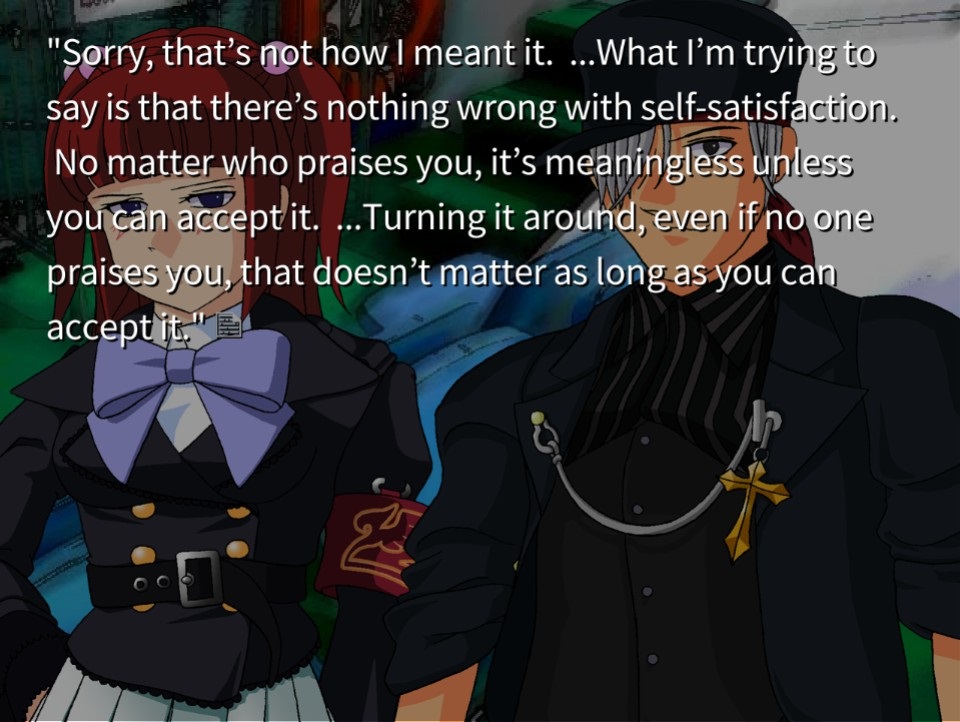
Umineko: When They Cry by 07th Expansion

This manifesto of sorts, “How to Make Good Small Games”, is an attempt to meet this perspective halfway. It’s divided into twelve thoughts, made up mostly of esoteric creative theory (why do I like small games? why do I like making small games?), and hopefully a little actionable advice. I can tell you “scope small uwu”, but if you don’t believe small games can be good in the first place, all you’ll hear is a homework assignment you have to do before you can make the games you really care about. That’s a miserable way to make art, and if you think that’s what “scope small” means, I don’t blame you for getting upset.

These thoughts are also for people that already love and appreciate small games, but don’t feel confident enough to jump in and make them themselves. Or you have made some small games, but you don’t feel good about them. You don’t think they measure up to works you admire. It’s easy to say “it doesn’t matter if your games are good or bad, just make stuff and have fun.” But people want to make art they feel proud of. Not just for the satisfaction of finishing a project, but because it measures up to their own tastes.

I make games that I like. None of them have felt like homework. I think they’re good, and I’m proud of them. Most of them I put together in a couple dozen hours apiece. I don’t make any money doing it, so if that’s your goal then this piece probably won’t be that useful to you. But if your goal is also to make games that you like and are proud of, I think my thoughts might be helpful. 

Comforting Sounds by colin

1. A game’s quality is independent from its scale. 

I consider this a foundational truth, and it’s the basis for every piece of advice on this list. Whether a game is good or not has nothing to do with how big it is or how expensive it was to make. 

In practice, a more laborious and expensive production usually leads to worse outcomes. Large studio releases are often built by many small teams working nearly independently from one another. If the play-testers find a problem with one of the levels, the creative leads have to coordinate multiple teams to make corrections. Often they’re running up against a deadline, and they won’t have time to juggle the graphics team, the level geometry team, the physics team, etc. to make the needed corrections. Even though they successfully identified a problem, the game ships with it anyway. Problems like this compound across development and lead to creatively incoherent stories.

These issues replicate themselves even at the scale of solo hobbyist development, because you have finite time and energy. The bigger a game is, the more parts of it you won’t care about editing or polishing. When you make smaller games, you can focus on the parts that viscerally excite or delight you. That makes it much easier to make a game you’re fully happy with.

Smaller games aren’t just easier to make they’re easier to make well. The bigger a game is, the more moving parts there are bouncing around inside it, the more opportunities you have to mess up. 

I believe many of my friends make games better than most beloved $60 AAA epics. There are many individual moments in games like Super Mario Odyssey that delight me. But if I’m disappointed in the overall arc of a game, I’ll leave it feeling deflated and unsatisfied. In contrast, if I finish a five minute Bitsy game with a big grin on my face, I think that makes it a stronger, more complete work.

There are gradients to this, of course. I’ve played many games, from hobbyist devs and from large studios, that I care deeply about even though I don’t think they “work” as cohesive stories. Chrono Cross is frustrating and half-baked I hate how it pulls its punches instead of relishing the darkness of its ideas. But it’s so aesthetically beautiful and full of individually strong writing moments that it’s difficult to dislike. Your critical lens should leave room for these kinds of partial successes. It gives you more opportunities for joy in your play, and makes it easier to understand friends who have different creative values. 

But when you’re making your own games, strive to make something you love wholeheartedly. Don’t settle for less.

What constitutes a game that “works” is a matter of purely personal taste. I don’t just expect your definition to be different from mine I want it to be. Your taste and your experiences work together to shape the stories you can tell, and art would be boring if everyone told the same stories. 

But whatever your definition is, it should be scalable. A ten minute game should be able to succeed for you as effectively as a AAA epic. If you can get there, you’ll feel more confident and excited setting out to make small games. 

Monster Hug by John D. Moore

2. A game’s quality is independent from its emotional scope.

Most people won’t say “games can only be good if they were expensive to make”, at least not outright. But what about “good games make me feel intense feelings”? Or “good games get me obsessed with playing them for weeks or months on end?” 

Different games are meant to accomplish different things. If you’re reading a 30 hour visual novel about a tragic romance like The House in Fata Morgana, you probably want it to make you cry. If you’re playing a roguelite like Hades with metric tons of bespoke content, where complete playthroughs are an hour long and getting the true end requires playing it over and over, you probably want it to inspire compulsive, regular play.

These are intense feelings, and it’s cool that games can inspire them in us! I love playing a long RPG and getting really into the systems, making my numbers go up. I love crying at the end of huge stories. I love getting deep into fighting games or shmups for weeks at a time.

But in the same way a short story functions differently from a novel, or a sonnet from an epic poem, small games have different terms for what constitutes “success”. Maybe a game wants you to smile, or have one really good laugh. Maybe it wants to inspire a quiet unease that your conscious brain quickly forgets, but that bubbles up a few days later and sucks air out of your chest. Maybe it’s a hard action challenge you compulsively play and replay until you get a run you’re satisfied with which only takes thirty minutes, or twenty, or five.

Become sensitive to the quieter emotions art inspires in you. Everyone can love the soaring catharsis at the end of a big blockbuster. But by attuning yourself to these subtler feelings, you build a stronger toolbox for both making and enjoying art.

CommitArsonNow by sylvie

3. A game defines the terms of its own success.

This is good advice for being a game dev, and also for being a generous, well-rounded player and critic. You should want a game you play or a game you make to be the best version of itself. Nothing more or less. When you dismiss a 1-2 hour exploration game for having a smaller world than Hollow Knight, you’re robbing yourself of an experience you might have otherwise enjoyed. When you look at a Unity game made with store-bought assets and ask “what if it had expensive custom art for everything”, you’re asking it to be something it’s not, instead of looking at what the game’s actually doing with those assets.

Look at the paint on the canvas. How does it make you feel? That should be the root of your judgment. Don’t ask why the artist chose oil paints when you prefer graphite, or why they went with such a small canvas when big paintings are much more impressive. Accept it for what it is. Then decide whether it’s good at being what it is.

I’m not asking you to like everything, to forsake having opinions about art. I obviously enjoy being opinionated about these things. But when you’re more generous with the games you play, you’ll be more generous with the games you allow yourself to want to make. You’ll be more willing to experiment, to tell smaller, weirder stories. 

You can’t look to popular videogame critics for help on this. Large game sites are either full of sycophants who’ll breathlessly tell you why the latest hot garbage from GamesCorp is the greatest story of the 21st century, or acerbic assholes who’ll tear down any experience that isn’t sufficiently similarly to the six games they liked when they were fourteen. Neither will help you develop into a generous (but discerning) player, which is what you want to be to be a skilled creator.

Rena Game by Toby Alden

4. A game succeeds when it fulfills its promises.

Every game makes promises to the player, and then attempts to fulfill those promises. I’m borrowing this terminology from Brandon Sanderson’s excellent writing lectures. It’s just another way of thinking about “setup and payoff”, which is foundational to a lot of good storytelling advice. Instead of comparing your game to big studio epics, just be conscious of the expectations you’re setting for the player. Then strive to deliver slightly more than they expect. (Not a lot more we’ll cover that later. Just a little more is enough.)

The expectation for many (single-player) games is that it will introduce rules, develop those rules, and then reach an interesting climax. This usually entails stages getting harder and more complex. This is the Game Design 101 way of doing things, and it’s a great starting point. There are lots of ways to be playful and creative about these things though. Some games are immediately hard in a disarming, strange way. Some games stay easy and straightforward the whole time mechanically, but the aesthetics or story develop in pleasing ways instead. Setup and payoff is about creating emotional arcs that stick in your players head, and there are infinite ways to do that. 

Every new character, every new mechanic, every new enemy you introduce is a promise. It’s a promise that the game won’t just introduce and then immediately abandon an interesting idea, that the idea will develop and matter to the game’s arc as a whole. This is true whether you’re making a play-focused game or a text game with lots of writing. The underlying storytelling mechanics are the same.

Setup and payoff is about making every part of your game feel like a unified journey. Every moment of catharsis that’s ever made you gasp and go “holy shit that was so cool” in a game or book or movie was part of a setup and payoff. It’s Frodo saving himself with the star of EƤrendil a whole book after getting it from Galadriel. It’s finally defeating Virgil in Mission 17 after getting trounced by him in Mission 4. It’s smaller moments too: it’s a collection of great punchlines, it’s dying with the snakes, it’s making a promise you’re not sure you’ll keep.

You can make whatever kind of game you want. But if there’s any stage or scene or idea you could take out without it detracting from the rest of the work, that’s a reason to pause. The idea might be making a promise you don’t keep, or fulfilling a promise you forgot to make.

golden rays of sunshine by saori

5. It's easier for a game to succeed if it makes smaller promises.

If making a good game means fulfilling the promises the game makes, it follows you can make things easier for yourself by making smaller promises. There’s a lot of ways to do this!

The most basic approach is to have fewer moving parts. Fewer mechanics, fewer enemies, fewer assets, fewer characters, fewer stages. It’s easier to introduce and develop three ideas into a satisfying climax than it is ten ideas, or a hundred. 

This is why so many RPG Maker devs get stuck early on. An empty RPG Maker project already has a menu full of a hundred options, a whole system for making top-down maps (now with HD art assets), and painfully fleshed out instanced combat. You can’t explore all those ideas in a tiny game, so devs have to go out of their way to ignore or strip out aspects of the engine they’re not interested in using. 

This is a problem with many engines that give you a massive toolbox to play with. New game devs feel obligated to make use of all the engine’s features, and their scope balloons as a result. They can’t make a game at that scope that satisfies them because it’d take hundreds of hours of work, and they give up. Be wary of any tool with an ocean of built-in features. Either be willing to discard most of those features for any given project, or use a simpler tool.

Production value also plays a part in a game’s promises. The more expensive a game looks, the more a player expects out of it. By embracing amateur aesthetics, you can disarm the player and leave them surprised and delighted by your payoffs. 

Which amateur aesthetics are charming and which are obnoxious depends on your personal tastes. I love simple MIDI music, compressed voice sample sound effects, photograph backgrounds, recontextualized stolen assets, default RPG Maker art. I don’t care about controller support because joytokey is easy and more fully featured than anything I could implement. But if a game is buggy in a way that gets in the way of me playing it, I’ll quickly grow annoyed and quit. I embrace the amateur aesthetics that delight me and save me work, and strive to be professional in the ways I care about.

If you don’t like any amateur aesthetics, it might be a sign that you’re being a little too serious about all this. I try to approach making games with an irreverent playfulness, whatever the tone of the game I’m making. I’ve had a lot of fun making games that way. Play more cute funny hobbyist games on itch. I’ve played extremely silly shitposts that are also legit excellent action games. There’s no correlation (or at least no positive correlation) between an artist’s self-seriousness and the quality of their work.

Dandelions by Lotus

6. Fulfill promises in an interesting and delightful way. 

This is the “draw the rest of the owl” step. I can’t tell you how to make games that you like. You have to pay attention to your own reactions as you experiment. What makes you smile? What makes you feel a swelling in your chest, a tiny fire of excitement in your heart? Pay attention to those feelings. They’re a sign you’ve found a payoff worth building a game around.

This is where your personal style comes into play where you make games that are uniquely your own. A lot of your promises come through in screenshots and trailers and marketing copy. “This is an action platformer with five stages. Your character jumps and shoots their way through waves of enemies. It has an endearing pixel art style and high energy music.” This is enough to get me interested, because I love a lot of games that meet that description. But it’s the actual execution and payoffs on these promises that’ll reward me for that initial interest. I don’t want to play something that’s just like games I’ve played before the genre fixings are only the initial hook. 

The good news is that most “originality” is just remixing other peoples’ ideas in surprising ways. Copying one game you like is boring. But if you copy ideas from ten games you like, plus two comic series and one sci-fi novel trilogy, the resulting game will feel personal and special. So play lots of games! Read books and comics, watch movies and TV, listen to music. Foster interests outside of art, make friends, live a full life. You’ll be surprised how many colors on your palette you suddenly have to paint with.

And of course, one way of fulfilling promises is to invert the promise, to do something completely different in a way that’s ironic and satisfying. This works for big projects like Doki Doki Literature Club of course, but this works for little games too. Joey Wamone’s Highly Cursed Record Collection sets you up to expect a small anthology of WarioWare-style microgames. It winds up delivering something very different and memorable. Don’t close yourself off to creative ways to subvert your players’ expectations.

Don't Look Back by Terry Cavanagh

7. Don’t over-deliver on your promises.

Have you ever watched a movie or read a book that goes on one scene too long? Ever had the thought “if you’d just ended five minutes earlier that would have been perfect”? 

This is a rarer problem in hobbyist games than under-delivering on promises, but in its own way it’s just as deflating. Not too long ago I read a visual novel with very cute, endearing art and writing. For a couple hours, I was having a great time. Then it reached the climax, and it suddenly launched into a massive final boss fight out of nowhere, complete with elaborate custom battle engine. The music swelled, the fight dragged on, and then continued into an extended ending and epilogue. 

It all felt unearned, out-of-sync with the journey I’d been on up to that point. The author went for an Undertale-scale catharsis for a story that was much smaller than Undertale. It was as much a betrayal of my investment in the story as a half-baked climax would have been. I was disappointed even though I was having a good time up to that point, and even though the ending was skillfully done and could have been a fitting conclusion to a different story.

This is often a writing problem. Remember that you are more invested in your characters than your audience is. To you, your characters are vibrant and alive, because they live fully and expansively inside your mind. But your readers only have the words you’ve given them, and they probably don’t care about your cast as much as you do.

It’s not just a writing problem like all these “rules” this is really about storytelling, so it applies whether or not your game has words in it. Has your game earned that four stage final boss fight? Does it need to get that challenging at the end? Is it weird that your last level takes as much time to beat as the rest of the game put together? If you have intentional answers to these questions that’s fine, but if you don’t it might be a sign to rethink things.

anywhere else by sraƫka-lillian

8. Form factor is a part of a game’s promises.

Your game is making promises to your players before they even start playing whether you want it to or not. Think about the information your audience is suddenly processing when they first load up your itch page.

Is it a browser game? How long does it take to load? Does it work on mobile? Does the page have a lot of text on it? No text at all? Does the page have a fancy custom theme, or a barely edited default one? If it’s a downloadable game, is it free, paid, or pay-what-you-want? If it’s pay-what-you-want, what’s the default price? How many megabytes is the download? Are there any system requirements listed, and if so how intense are they?

All that without even looking at a video or a screenshot. What do the answers to these questions tell your player about your game? Less is more. By blasting less information at the player, by taking up less space, by making it faster and easier to boot up your game and quickly start playing, you hedge their expectations and disarm them for your payoffs before the game even starts. 

The intrinsic promises of a game’s form factor matter a lot to me (maybe too much), to the point that it guides what engines I use. It’s why I’ve been hesitant about adopting RPG Maker MV or MZ. Since games in those engines are built on Javascript and Electron, standalone releases essentially have to come packaged with an entire mini-browser, and even simple games take up well over 100 mb of hard drive space. That feels fine to me aesthetically for games that take an hour or more to play, but it discourages me from wanting to make a 20 or 10 or 5 minute game. Every engine and release page builds its own set of expectations in the player. You don’t have to be as neurotic as I am, but it’s good to be conscious of the expectations you’re setting when you’re picking an engine or preparing for release.

Freeware vs. commercial games is outside the scope of this piece. I’m obviously a strong proponent of freeware since all my games have been free for ten years, but I have nothing against commercial releases. Just know when money’s on the line, players are suddenly much less forgiving of bugs and issues, and much more demanding of features like built-in gamepad support and remappable controls (even though joytokey is extremely easy and works fine). They also expect your game to be beefier in scope even if your ten minute platformer is extremely good, most people don’t want to pay two dollars upfront for it. Thankfully most people won’t begrudge Pay-What-You-Want options however brief your game is, and I’ve always enjoyed being able to fling the author a few bucks after playing an excellent game.

QUAD DEATH: Core Meltdown EX by fotocopiadora

9. Finish your game before releasing it.

Nine times out of ten, when you end your game on a “To Be Continued…” title card, you are failing to fulfill your promises. Your players will feel disappointed and cheated, and they’ll be unlikely to check out more of your work. 

You can soothe this wound by making it clear up front that your story isn’t finished. Labeling it a “free demo”, or putting “A Prologue” in the subtitle are methods some developers use. But before taking this approach, ask yourself why you want to release your game before it’s done. Are you hungry for feedback? Do you want to know if people will like it? Consider asking friends to play your game privately. Watch them play, in-person or over a screen-share call where you can hear them reacting. This will be more valuable to you than blasting out an incomplete demo to strangers. 

If you’re still desperate to release something, that might be a sign that it’s time to start wrapping up this project. Find ways to slash scope, to make smaller promises. Make it easier for yourself to get the game to a point where you’re happy releasing it.

Super Xalaxer by Rhete

10. Serial games are not a shortcut.

A “prologue game” is another way of saying “episode one”: releasing your game episodically, in two or more parts, over a long stretch of time. This is nearly always a bad idea. Good serial works are built out of smaller, individually satisfying stories. It’s harder to make a larger story out of complete sub-stories than it is to just make a small, good story. Serial works are “hard mode”. When even massive games studios like Valve struggle to finish their serial stories (let alone finishing them well), it’s obvious they are not a good choice for most hobbyists.

If you truly want to make a serial game, try to make the first release work as a complete story in its own right. sacrament i is a freeware prologue game to LUCAH: Born of a Dream, a massive commercial project that was still a year off when sacrament i was released. sacrament i is an extremely satisfying story, and if LUCAH had never come out, I would still be glad that I’d played it.

Making your serial games this way also gives you an out. If you’re proud of your first release as a stand-alone story, you won’t feel as bad later if you decide to stop work on the follow-up.

You can keep doing this indefinitely. Make each game in your ongoing series so good and complete that any individual game is an opportunity for players to bow out, to stop playing. This paradoxically makes them more likely to come back for your next release. Build a shared universe between your games, reuse characters and assets and engines you can save yourself a lot of work this way! But don’t use “I’ll address that in the sequel” as an excuse to cheat your players out of a promised payoff.

Masochistic Maiden Aria and the Cavern of Blissful Agony by Aria

11. Don’t worry about going viral.

Pursuing small, specific goals with your games also means courting small, specific audiences. AAA games are so cluttered and full of extraneous nonsense because they try to make everyone happy at once. Investors want a game’s audience to be as large as possible, so they stand the maximum chance of recouping their investment. Hobbyist games are free from this obligation. All you have to worry about is making a game you like.

If fifty people in a room watch your amateur band play and have a good time, we generally understand that to be a success. So why does "fifty people played my freeware game and a couple left nice comments" feel painfully humble? Your art touched the lives of the same number of people.

Even getting that far can be hard starting out though. It’s a bitter pill to spend 20-30 hours making a piece of art, and then no one responds to it at all. This is where community comes into play. Make friends with other artists you respect. Actually make friends with them; don't just talk to people because you want them to play your games. Play their stuff, leave nice comments on the work you like. Don't expect they'll play your work in return play the games because you enjoy them. If you put that kind of positive energy out into the universe, it'll come back to you before too long, without you even trying.

Hobbyist games have far less in common with AAA or even big commercial indie games than they do with local arts spaces. When you bring your poetry to a small reading or a painting to a local free gallery, there's no expectation that your work will go viral, that it'll show up on a Vinesauce stream. You're there because it's fun to be part of a small community of creative people.

If you can build a space for yourself in a positive and supportive community, you'll always get plenty of feedback from people you respect. It's not the "thousands of adoring strangers and millions of dollars" kind of success you might have been programmed to expect from Indie Game: The Movie. (Do people still care about IGTM? Is my grouching a decade out of date?) But it's enough. You’ll get a nice rush of feedback on release day, and a few more players will trickle in over the coming weeks. Before too long, you’ll be ready to end that chapter and start work on your next game. 

Lair of the Three-Headed Hydra by Dilis

12. Good is good enough.

If you get to a point where you can consistently make games you’re happy and satisfied with, games you believe in your heart are good, you’re light years ahead of the vast majority of game developers. This is a great goal to aspire to, and if you’re already there you should feel proud of yourself.

But what if you want to be more than “good”? What if you want to make something great? What if you want to make a masterpiece?

I’ve used “good” throughout the piece for a few reasons. Good implies a value judgment. If a game can be good, it follows that a game can be bad. Hobbyist game spaces can be touchy-feely and non-judgmental to a fault sometimes. There’s a time and place for being opinionated of course; I’m not going to exhaustively criticize a friend’s game without them asking for that kind of feedback. Often the kind thing to do is to find a couple things about a game that you like, compliment those, and swallow your petty criticisms. 

But we’re all human. We all have opinions about art, and it’s silly to pretend we don’t. Hence the combative and silly title for this piece. I want to acknowledge that you probably don’t just want to make games; you want to make games you like

But trying to be “great”, or to make a “masterpiece”, is beyond being opinionated. You’re setting yourself up for disappointment, for being unable to appreciate more humble successes. To me, these terms connote ambition and scale in a way “good” doesn’t. It goes beyond making each of your stories “the best version of itself”, and makes you start wondering “is this little thing I’m excited about even worth making?” You talk yourself out of making art you might’ve been happy with because you don’t think YouTubers will want to make videos about it.

I think if you make something “great”, it should happen more or less by accident. Get consistent at making stories you’re pleased with. Build a joyful, healthy, positive relationship with art. Of course, you’ll naturally develop favorites among your work. After years of doing this, you’ll have some projects you look back on and smile, and some you look back on and go “holy shit I can’t believe I made that.” By regularly shooting for “good” instead of “great”, you’ll be great without even trying.

Things That Aren't Real by vextro

13. Have fun :)

It doesn’t matter if your games are good or not. It doesn’t matter if you have good taste or not. Art is bullshit; all this is just a fun distraction while we’re waiting to die.

So don’t take any of this too seriously. The point of this advice is that it’s fun to make art, to have opinions about art, to try really hard to make your art something special you can be proud of. If you’re not trying to make a living off art (which you shouldn’t even be thinking about if you’re just starting out) then the actual stakes here are non-existent. 

So just have fun with it. Relax. Don’t overwork yourself. Don’t psyche yourself out to the point you can’t make things at all. 

You can take art seriously. But only because it’s fun to take art seriously, to get worked up over something that ultimately doesn’t matter. It’s fun to be a huge nerd and write a self-indulgent 6300 word blog post about freeware games. But if you ever feel like your relationship with art is making you legitimately unhappy, it’s time to take a step back, breathe deeply, and go touch some grass.

Umineko: When They Cry by 07th Expansion

I didn’t write a dumb manifesto because I want friends to make games that meet my arbitrary critical standards and personal tastes. I’m not telling you to make games John thinks are good. I want you to have fun making games you think are good. I want you to have radical pride in your work, even when the ugly systems that shape our lives tell you your stories are worthless. Because that journey is fun as hell. It’s life-changing, in a small way, to share art that you’re proud of, to see it resonate with others.

I’ve evangelized about this stuff more and more lately. I feel very passionate about it. I’ve seen a lot of my friends make games for the first time many have gone on to make even more games. I’ve gotten a lot of joy playing their stuff, watching their creative voices grow, seeing how happy making rad art makes them. A lot of their stuff has influenced my own work in cool ways.

My goal has always, always been to empower people. To demystify making games, to make it feel doable to friends on the outside. To build communities where friends can share their work and know everyone will be supportive and kind. To have rich conversations about art, and together to make works of art that converse with each other. 

You don’t have to lock yourself in a gamedev bunker and make your prescribed “first dozen games that are going to SUCK” so you can get to your pixel art metroidvania. By adjusting your perspective, you can start making games you’re happy with right now. Find the tool that feels right to you. Spend an evening fiddling with it. Make something happen on the screen that you like, that sparks a tiny fire in your chest. Then think about what a small game built around that spark might look like. 

Power Struggle by tom smizzle

And if you're already making games, if you've taken that leap already, but you don't feel good about your work... you're not alone. Every little pep talk in this piece came out of arguments I've had in my brain. I've felt bad about my work not being ambitious enough, not being pretty enough, not getting enough downloads on itch. I've wrestled a lot with those feelings, with everything I love and get excited about feeling pointless when I'm in a bad spiral.

Or instead of being down on myself, I'm bitter and angry at everyone else. My most viral success is still the platformer I made when I was 19, literally a decade ago. People don't seem to care about hobbyist games as much as they used to. I remember when big games sites had regular columns talking about cool new flash games. That era's over now, and it hurts to not have that kind of institutional support. It doesn't help that a lot of the biggest champions of hobbyist games in that era turned out to be grifters or predators or both. There's a lot of reasons to be disillusioned.

But that's not productive. Being bitter about the past or getting mad at people because they don't share your niche interests isn't healthy. Neither is getting depressed and deciding the boundless joy you've gotten from creative work is stupid and pointless. What’s productive is building positive and supportive communities, and striving to lead a creatively fulfilled life, whatever form that needs to take for each of us.

Scope small, and try your best with the resources you have access to. Enjoy the process. Make little things you're proud of. That should be enough. 

Seven Minutes by Virtanen